Family of Brands

Here's how the power of bleach can help remove soap scum and moisture that mold feeds on, especially on your shower walls.
Mold in the shower and bathroom walls is usually caused by excess moisture from frequent steam, poor ventilation and lingering water on surfaces. Warm, damp conditions create the perfect environment for mold spores to grow. Without proper airflow or regular cleaning, mold can quickly spread across grout, tiles and walls.
Regular weekly cleaning can help to remove soap scum and moisture that mold feeds on, especially in grout lines and corners. Using a daily shower spray or squeegeeing walls after each use can also help keep mold at bay.
Mold on bathroom walls often appears as black, green, gray or brown spots or patches. It may look fuzzy, slimy, or powdery and tends to grow in clusters. Mold is commonly found in corners, near ceilings, or around windows where moisture accumulates. A musty odor may be present even before mold is visible.

Nylon scrub brush

Gloves

Microfiber cloth
Spray bottle or bucket
Spray or wipe the moldy area with warm water to loosen any buildup.
Pour ⅓ cup of Clorox™ Disinfecting Bleach into 1 gallon of water. This bleach solution works effectively to clean mold stains and mildew stains in shower grout and on shower curtains and bathroom surfaces.
Wipe the surface with the bleach solution, ensuring you cover all mold-affected areas. Keep surfaces wet for 10 minutes.
Rinse the area with warm water and wipe dry with a microfiber cloth to avoid water spots.
Make sure to dry the area completely.
For visibly soiled surfaces, preclean before disinfecting.
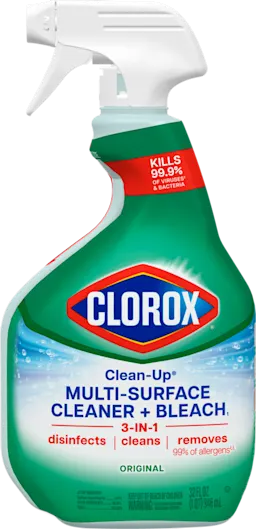
Hold and spray Clorox™ Clean-Up™ Cleaner + Bleach 4–6 inches from surface until thoroughly wet.
Leave treated surface visibly wet for 5 minutes.
Bleach-based mold removers like Clorox™ Disinfecting Bleach and Clorox™ Clean-Up™ Cleaner + Bleach are safe for use on hard, nonporous surfaces such as glazed ceramic tile, porcelain, glass, stainless steel, plastic laminate, sealed granite, vinyl and silicone. These surfaces can withstand the power of bleach when used as directed. However, bleach should not be used on marble, non-stainless steel, aluminum, chipped porcelain or porous tile, as it may cause damage or discoloration. If you're unsure about a surface, test a small, inconspicuous area first to ensure compatibility
It may be tempting to use a more concentrated bleach solution to speed up mold removal, but this is not recommended. Bleach and water solutions should always be mixed according to label instructions to ensure safety and effectiveness. Overly strong solutions can damage surfaces and pose health risks due to increased fumes and corrosiveness. For example, Clorox™ Disinfecting Bleach should be diluted to ⅓ cup per gallon of water for mold stain removal. This concentration provides sufficient cleaning power while helping to remove mold stains from hard, nonporous surfaces without compromising surface integrity.
It’s best not to leave bleach solutions on surfaces longer than the recommended time. For example, with Clorox™ Clean-Up™ Cleaner + Bleach, keeping the surface visibly wet for 5 minutes ensures proper disinfection. For visibly soiled surfaces, preclean surface before disinfecting. Leaving bleach on for too long may lead to discoloration or surface wear. To get the best results while keeping things safe, always follow the instructions on the product label for how long to leave it on and when to rinse.
Gloves are not a requirement when using bleach-based products. But for sensitive skin or prolonged use, it is a good idea to wear rubber gloves.
To prevent mold in the shower and bathroom, reduce moisture and improve ventilation. Use an exhaust fan or open a window while showering to keep humidity low. After showering, wipe down walls and ceilings to remove moisture. Regularly use Clorox Clean-Up Cleaner + Bleach or Clorox Disinfecting Bleach solution to remove soap scum and moisture that mold feeds on. You can also seal any plumbing or tile leaks, and clean grout lines to prevent buildup that can encourage mold growth.
Mold in the bathroom and shower is typically caused by excess moisture and poor ventilation. Common causes include high humidity, leaks in plumbing or steam from showers. Mold can develop on bathroom ceilings, walls and around shower areas if these surfaces remain damp for extended periods. Lack of proper airflow or ventilation, such as a non-functional exhaust fan, can trap moisture, creating an ideal environment for mold to grow.
In small amounts, mold in the shower is generally not harmful. However, heavy exposure may cause allergic reactions or breathing issues. It’s best to clean it promptly with a bleach solution — such as a mixture of Clorox™ Disinfecting Bleach and water — to eliminate harmful spores on hard, nonporous surfaces.